
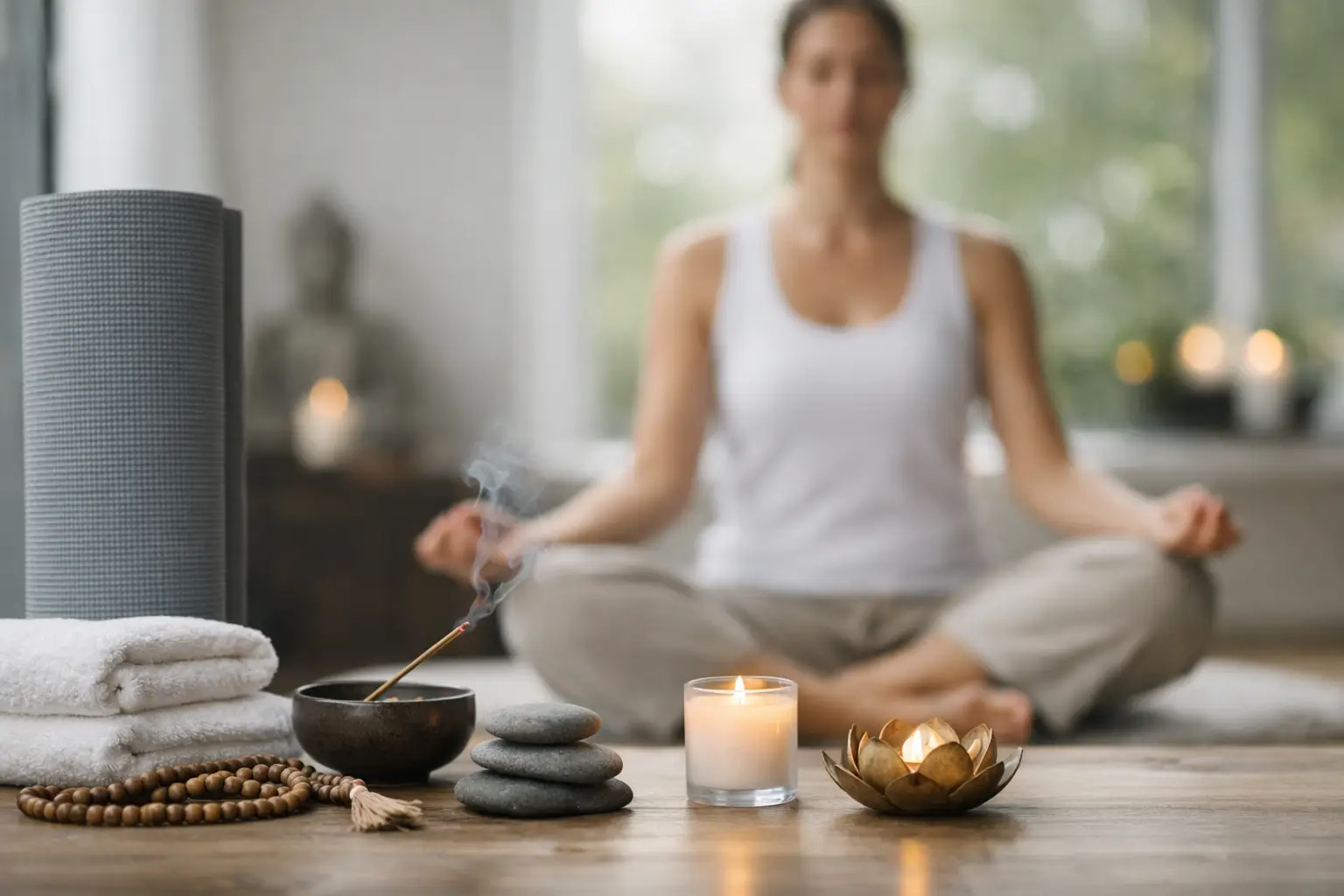
Best Meditation Styles for Beginners
A restless mind does not need punishment. It needs the right doorway.
That is why choosing among the best meditation styles for beginners matters more than most people realise. Many people try to meditate by forcing silence, sitting too long, or copying methods that do not match their present condition. When that fails, they may conclude that meditation is simply not for them.
Often, the problem is not meditation itself. The person may simply have entered through the wrong doorway.
There are many practices that prepare the human being for meditation. Some work primarily with the breath, some with attention, some with the body, some with sacred sound, and some with the heart. They do not all lead to the same depth, but each can have value when it is used consciously and at the right stage.
For a beginner, the wisest path is not to choose the most advanced method. It is to begin with a practice that helps you release stress, become more grounded, gather scattered attention and gradually return inward.
How beginners should choose a meditation style
A good beginner practice should be accessible, grounding and repeatable. That does not mean it will always feel easy. Some resistance is natural. But the practice should help you become more present rather than creating additional strain.
If you are emotionally exhausted, a simple guided practice or gentle awareness of the breath may help you settle first. If the mind is scattered, mantra or focused attention can offer a clear point of return. If you are seeking a deeper spiritual path rather than relaxation alone, mantra and authentic spiritual meditation can gradually lead much further.
The best meditation styles for beginners are therefore not necessarily the techniques that appear most impressive. They are the ones that help establish a foundation strong enough to carry deeper practice later.
Discernment matters.
1. Breath awareness meditation
For many people, awareness of the breath is a natural place to begin.
Sit comfortably and allow the body to become quiet. Bring attention to the natural movement of breathing without trying to control it. Notice the inhalation. Notice the exhalation. When the mind wanders, gently return.
The breath is useful because it is always present. It brings attention out of endless thought and back towards the living body.
Even five or ten quiet minutes can begin to reveal how continuously the mind moves.
The purpose is not to make breathing another task that must be performed correctly. If you begin monitoring or controlling every breath, soften the practice. Let breathing happen naturally and simply observe.
Breath awareness can help prepare the mind for deeper meditation, but the breath itself is not the final destination.
2. Guided meditation
For someone who has never meditated, sitting alone in silence can initially feel difficult. A guided meditation can therefore provide a useful first structure.
A voice may guide attention towards breathing, physical relaxation, inner stillness or a particular area of awareness. Because there is something to follow, the beginner does not need to continually wonder what to do next.
This can be especially helpful when the mind is heavily occupied or when the person has not yet developed the ability to remain inwardly focused without external support.
But guided meditation should not create dependency.
Its true value is that it can help a person learn how to become quiet enough to enter inwardly. Over time, the practitioner should increasingly become capable of carrying the practice from within rather than always needing another voice to lead the way.
Guidance is therefore a doorway, not the destination.
3. Mantra meditation
Mantra meditation uses sacred sound as a point of concentration and inner direction.
Instead of following every passing thought, attention repeatedly returns to the mantra. Through repetition, the scattered movement of the mind can gradually become more ordered.
Traditional mantra practice goes much deeper than repeating an ordinary sentence or positive affirmation. Sacred mantras have been preserved within spiritual traditions because sound, vibration and Consciousness are intimately connected.
For this reason, a mantra should be approached with respect.
Not every mantra is appropriate for every person or every stage. More advanced mantras should not simply be selected from the internet and repeated without understanding. Within authentic spiritual traditions, instruction, pronunciation, rhythm and readiness all matter.
This is one reason Divine Meditation cannot be reduced to a relaxation technique. Mantra forms part of a much deeper path through which Consciousness is progressively opened and refined.
For the beginner who feels naturally drawn towards spiritual transformation, mantra can become an important doorway.
4. Body awareness and body scan practice
Many people spend most of their day almost entirely in thought.
They may think, plan, analyse and worry continuously while hardly noticing what is happening within the physical body. A simple body-awareness practice can help restore that connection.
Attention is moved gradually through different areas of the body. You may become aware of warmth, tightness, heaviness, relaxation, pulsation or simply neutral sensation.
Nothing needs to be manufactured.
The practice is simply to observe.
This can help the beginner become more grounded and more aware of the relationship between thought, emotion and the physical body.
It is important, however, not to interpret every sensation as a hidden problem that must immediately be analysed or healed. The first step is awareness.
Learn to observe the body before trying to change it.
That principle is also fundamental to the wider Human Foundation: first become conscious of what is actually taking place within you.
5. Loving-kindness and heart-centred meditation
Some people do not primarily need greater mental control.
They need to rediscover the heart.
Heart-centred meditation directs attention towards qualities such as kindness, compassion, forgiveness and Love. It can help someone who has become hardened through stress, disappointment, grief or continual self-judgement begin to soften again.
But Love within spiritual life is much more than pleasant emotion.
True Love is strength.
It does not require the person to deny pain, pretend that everything is beautiful or tolerate what is wrong. Genuine Love brings clarity, understanding and the strength to act without hatred.
A simple heart practice can therefore begin by becoming quiet, bringing awareness towards the heart and allowing thoughts of goodwill towards another person to arise naturally.
Later, that awareness can expand beyond personal affection towards something greater: Universal Love.
The purpose is not merely to feel better.
It is to learn to live increasingly from the heart.
6. Walking meditation
Not every beginner needs to begin by sitting still.
For someone whose body is very restless, conscious walking can be a useful preparation.
Walk slowly and remain aware of each step. Feel the feet touching the earth. Notice the movement of the legs and body. Allow breathing to remain natural.
Whenever thought carries you away, return attention to walking.
The difference between ordinary walking and walking meditation is Consciousness.
The body may be moving, but awareness is no longer wandering everywhere at once.
This can also teach an important lesson: meditation and spiritual awareness should not remain confined to the few minutes in which you sit with closed eyes.
Eventually, the purpose is to carry greater Consciousness into ordinary life.
Walking, eating, speaking, working and relating to other people can all become more conscious.
7. Open awareness meditation
Once a person has developed a certain degree of stability, open awareness can become a useful deeper practice.
Instead of holding attention on one particular object, you become aware of thoughts, sensations, sounds and emotions without immediately following them.
This begins to reveal an important spiritual truth: a thought may appear within you without being the totality of who you are.
An emotion may arise and pass.
A sound appears and disappears.
Something within you is capable of becoming conscious of all these movements.
For beginners, however, this can easily become vague daydreaming if there is not yet enough inner steadiness. That is why a more structured practice is often helpful first.
Within deeper spiritual work, awareness itself must eventually become more refined. The purpose is not merely to watch thoughts forever, but to move progressively towards the deeper Consciousness within the human being.
How to know which meditation style is right for you
Instead of asking only, What is the best meditation?, ask:
What do I need to develop at this stage?
If you need grounding, begin with breath or body awareness.
If you find it difficult to sit inwardly without direction, guided meditation may be a useful doorway.
If the mind is scattered and you feel naturally drawn towards sacred sound, mantra may be appropriate.
If the heart has become closed or burdened, a simple heart-centred practice may help restore softness and Love.
If sitting feels almost impossible, conscious walking may be a more natural beginning.
But remember that these practices do not all represent the final meaning of meditation.
Within IAMGODIAM, meditation ultimately moves towards something deeper than relaxation or concentration alone. It is part of the human being’s return towards the Higher Self and a more conscious relationship with the Source of life.
A simple way to begin
Choose one appropriate practice and remain with it long enough to experience what it actually does.
Do not change techniques every few days because another method appears more interesting.
Begin simply.
Sit at a regular time if possible. Create a quiet environment. Allow the body to settle. Practise without demanding an immediate result.
Consistency builds the foundation.
The same principle applies throughout spiritual development: a tree does not begin with its crown. It begins with roots strong enough to carry what it may one day become.
This is why Human Foundation is so important within IAMGODIAM. Before deeper spiritual work can be carried safely and consciously, the human being needs grounding, discipline, awareness and increasing responsibility for thought, emotion, energy and action.
Meditation then begins to become something much greater than a method for managing stress.
It becomes a path of Consciousness.
Through deeper guidance, the practitioner gradually learns to move beyond scattered thought, beyond ordinary relaxation and beyond dependence upon external instruction.
This is where Divine Meditation begins to point towards the deeper purpose: the progressive return towards the Higher Self and the Real Self.
The right beginning does not ask you to become somebody else.
It helps you become quiet enough to discover what has always been within you.