
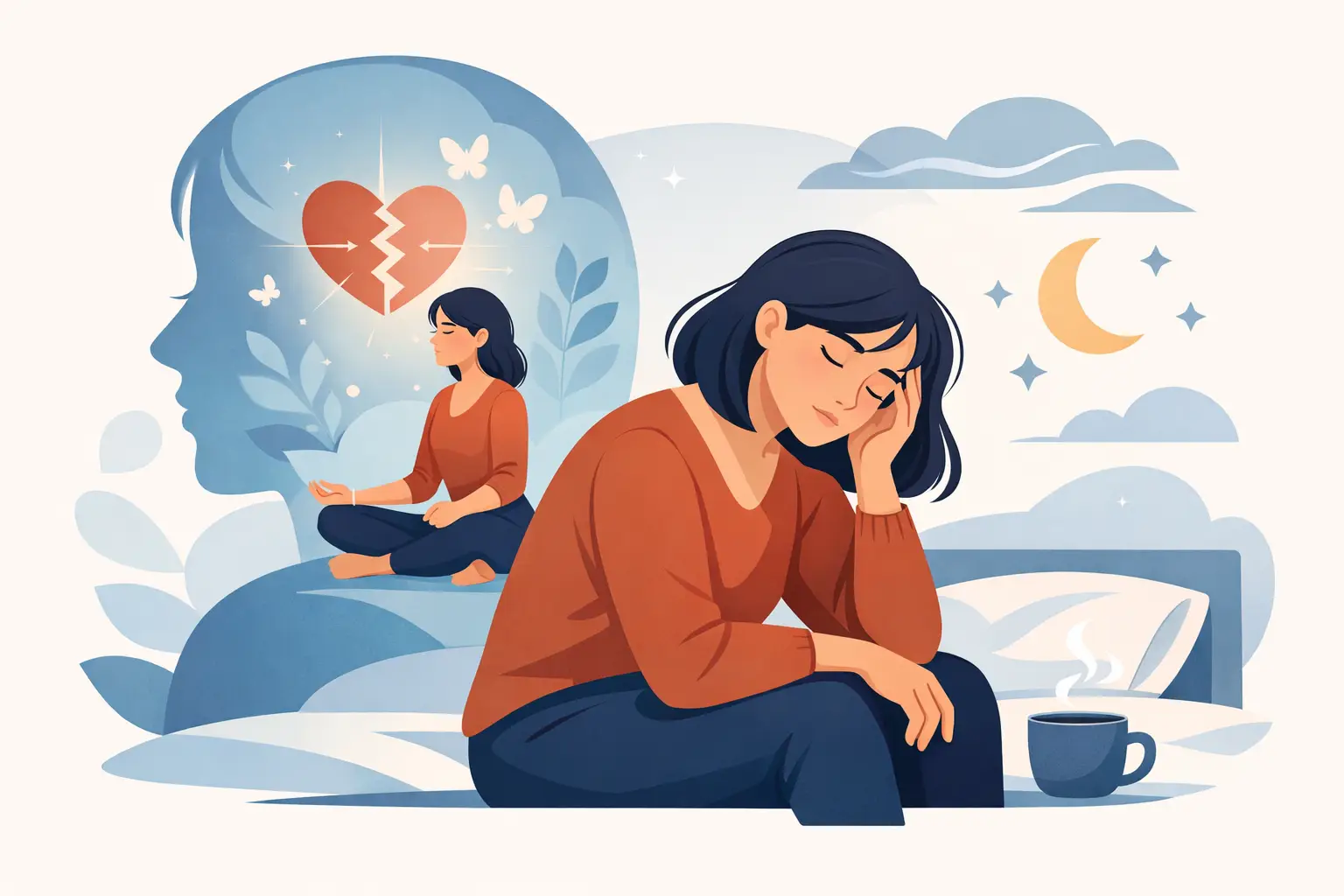
Some people begin emotional healing expecting relief and are surprised when tiredness appears instead. If you have been asking, does emotional healing make you tired?, the most accurate answer is that it sometimes can. Strong emotional experiences, therapy, meditation, grief or periods of deep reflection may leave a person temporarily tired, but fatigue should not automatically be interpreted as proof that healing is taking place.
Emotional work can require considerable attention and energy. A difficult conversation, a period of crying or becoming conscious of something painful may leave you wanting quietness and rest afterwards. At the same time, tiredness has many possible causes, including poor sleep, stress, physical illness, nutritional problems, medication, depression and other health conditions. The wider picture always matters.
Does emotional healing make you tired? Sometimes, and here is why
Emotional pain is not experienced only as thought. Difficult periods can influence breathing, muscular tension, sleep, concentration, appetite and the way a person responds to ordinary situations.
When someone begins consciously facing what has previously been avoided or suppressed, this can be demanding. Grief may become more noticeable. Long-standing reactions may need to be questioned. A person may recognise how much effort has been spent staying busy, appearing strong or continually controlling what they feel.
After this kind of emotional work, tiredness may simply reflect the need to rest.
It is therefore possible to feel tired after therapy, meditation, energetic healing, journalling, an emotionally intense conversation or a period of grief. What should be avoided is the assumption that every episode of fatigue means the body is releasing stored emotion or entering a special healing state.
Sometimes tiredness accompanies emotional healing.
Sometimes tiredness is simply tiredness.
Discernment is important.
The hidden work that emotional healing can involve
Healing is often described entirely in emotional language, but emotional change also involves attention, memory, behaviour and the way a person relates to daily life.
Old experiences may need to be reconsidered. A familiar identity may begin to change. You may recognise that a relationship, habit or belief that once helped you cope is no longer appropriate. This can require significant inner adjustment.
Grief can also become part of the process. Healing may involve mourning what happened, what did not happen or what you needed but never received. It can also involve recognising the amount of time and energy that has been organised around an old wound.
Within spiritual and energetic traditions, emotional patterns may additionally be understood through prana, the chakras and the subtle energetic system. Chakras and meditation can therefore form part of a wider spiritual understanding of emotional healing.
These teachings can offer another perspective, but expressions such as “energy recalibration” should not be used as automatic explanations for fatigue. A person can hold an energetic understanding while still taking physical symptoms seriously.
What kind of tiredness can follow emotional work?
There is no single type of “healing fatigue”.
Some people feel tired immediately after crying or discussing something emotionally difficult. Others want solitude after therapy, meditation or a demanding period of self-reflection. The mind may feel quieter afterwards while the body simply wants to stop doing and rest.
The experience may also fluctuate. One day there may be greater clarity and another day more emotional sensitivity. This does not necessarily indicate that healing is moving through predetermined stages. Human emotional life naturally changes according to sleep, stress, physical health, circumstances and what is being faced internally.
Feeling sleepy after meditation or energetic work can happen as well. Becoming still may simply reveal tiredness that was already present but easier to ignore while the person was active.
Rather than asking immediately whether the tiredness proves something is healing, ask a more useful question: What does my body genuinely need right now?
Signs the tiredness may be connected with emotional effort
There are situations in which the connection appears relatively straightforward. You may notice tiredness after an intense conversation, grief work, therapy session, crying or prolonged reflection, particularly when the fatigue settles after appropriate rest.
You may also notice that although you feel tired, something has become clearer. Perhaps an emotion has been honestly acknowledged, a boundary has become visible or a repeated pattern is easier to recognise.
Even then, it is better to describe tiredness as accompanying the emotional process rather than claiming that fatigue itself proves healing.
The real signs of progress usually appear elsewhere: greater awareness, healthier choices, clearer boundaries and less automatic reaction.
When it may be something more
Persistent or severe fatigue deserves attention.
If tiredness continues regardless of emotional work, becomes progressively worse or is accompanied by symptoms such as dizziness, significant sleep disturbance, unexplained physical changes, persistent low mood or difficulty functioning normally, it should not simply be labelled part of healing.
Medical or psychological assessment may be appropriate.
Emotional healing and physical illness can exist at the same time. So can spiritual development and depression, grief and nutritional deficiency, or energetic concerns and sleep disorders.
Spiritual maturity includes respecting these possibilities rather than forcing everything into one explanation.
Why healing can sometimes feel harder before it feels easier
People often begin inner work because they want to feel better, and sometimes relief comes quickly. At other times, the first movement is greater awareness.
Something previously hidden beneath busyness may become difficult to ignore. A familiar relationship pattern may suddenly look different. Anger may reveal hurt underneath it. Numbness may give way to grief.
This can feel harder because awareness removes some of the distance that previously existed between you and the problem.
It does not mean that suffering must intensify before healing is real. There is no universal rule that people must become worse before they become better.
What can happen is simpler: once you see something clearly, continuing exactly as before may no longer be possible.
That recognition itself requires adjustment.
How to support your energy while healing
The answer is not to stop emotional work whenever tiredness appears, nor is it to push through exhaustion because discomfort has been labelled healing.
Pacing matters.
If an emotionally demanding experience leaves you tired, give yourself reasonable time to recover. Reduce unnecessary stimulation where possible and avoid scheduling continual intense inner work without space for ordinary life.
Physical nourishment also deserves attention. Regular meals, appropriate water intake, sufficient sleep and gentle movement support the body during emotionally demanding periods.
Ayurveda has long emphasised that food, digestion, sleep, daily rhythm and mental wellbeing belong together. Emotional healing should therefore not become so focused on inner work that basic physical care is neglected.
Meditation can remain valuable, but practice should correspond to your present condition. If long meditation repeatedly leaves you overwhelmed or depleted, shorter and more grounding sessions may be wiser.
Deeper is not always longer.
More intense is not always more transformative.
Practices that can support you without overwhelming you
Simple grounding is often enough.
Sit quietly and become aware of the physical body. Allow the breathing to become natural rather than immediately trying to manipulate it. Walk outside without continual digital input. Give yourself some space after an emotionally demanding session instead of returning immediately to another intense obligation.
Journalling may help when it creates clarity, but it becomes less useful when it turns into repetitive rumination. Meditation may help when it develops awareness, but it should not become another way of forcing the body to continue when genuine rest is needed.
Guided support can also be useful when emotional work begins to feel confusing or repetitive. Meditation and energy healing may form part of a wider spiritual path, but they should complement appropriate emotional and physical care rather than replace it.
Does emotional healing make you tired in every stage?
No.
There is no universal stage of emotional healing in which tiredness must occur, nor is there a predictable progression from exhaustion towards permanently increased energy.
Someone may experience temporary fatigue during an emotionally demanding period and later feel more stable because certain conflicts or patterns are consuming less attention. Another person may not notice any particular tiredness at all.
If emotional or spiritual work continually leaves you exhausted, something deserves reconsideration. The pace may be too intense, the method may not be appropriate or an unrelated physical or psychological factor may be contributing.
Healing should not become an endless cycle of destabilisation followed by explanations about why the next difficult period proves that more healing is happening.
Over time, a sound process should support greater capacity for ordinary life.
A more compassionate way to read your fatigue
Instead of immediately asking, Why am I tired if I am supposed to be healing?, ask what the tiredness is actually telling you.
Perhaps you simply need sleep.
Perhaps a difficult experience has required more emotional energy than you realised.
Perhaps your daily life contains too little recovery.
Perhaps something physical needs attention.
Or perhaps the tiredness is appearing during a period in which you are finally becoming conscious of how long you have lived under pressure.
You do not need to decide which explanation is correct before allowing yourself appropriate care.
Within IAMGODIAM, emotional development is approached as part of the total human being. Physical life, emotion, energy, mind, the Heart and Consciousness influence one another, but respecting their connection also means refusing to explain every symptom through spirituality.
Sometimes rest belongs naturally within healing.
But rest is not evidence of healing simply because you are tired.
The deeper signs appear in the life that follows: greater awareness, clearer choices, less automatic reaction and a growing ability to remain connected with the deeper Self even while human emotions continue to move.
Healing should gradually help you live more fully, not make exhaustion your new spiritual identity.