
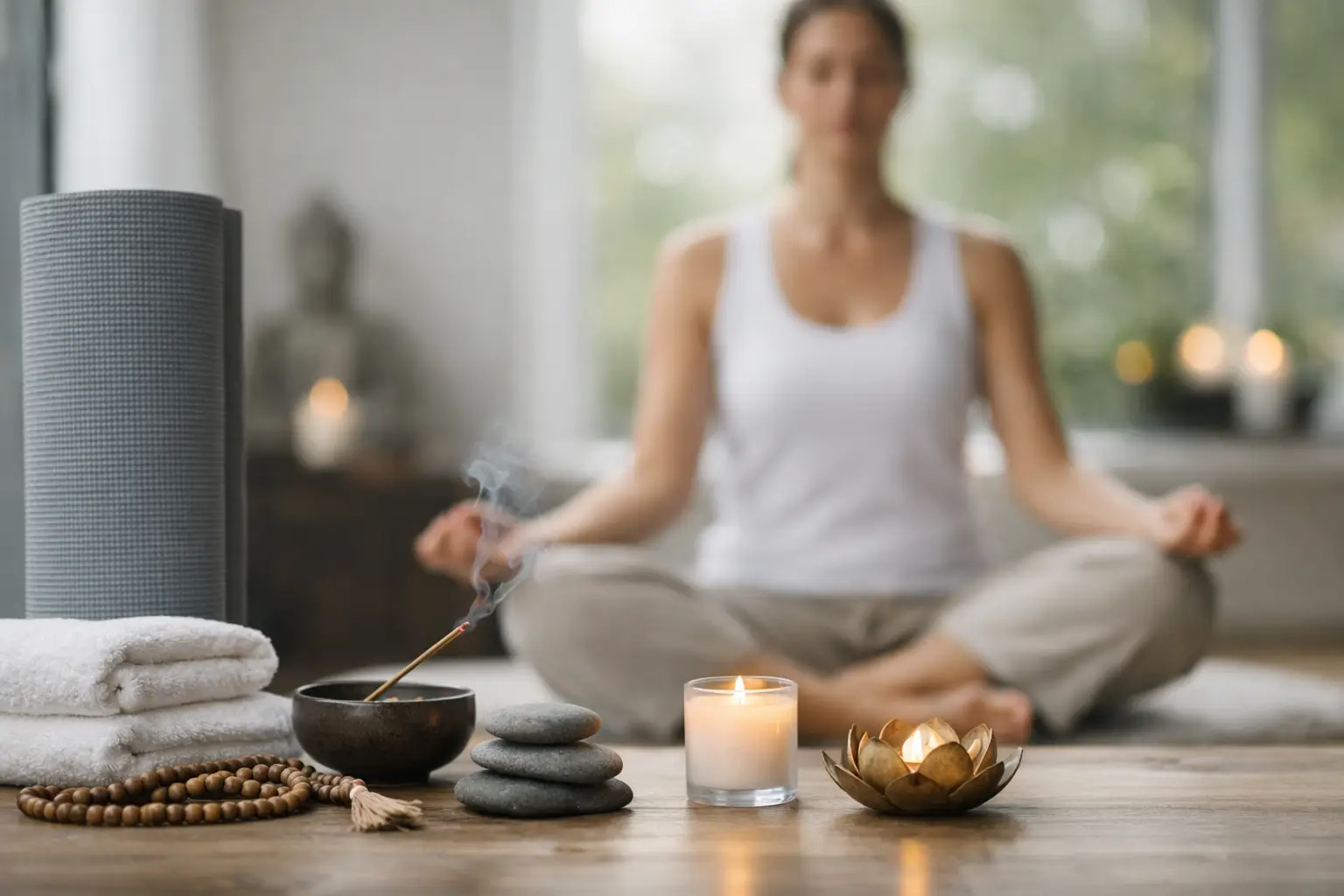
Some meditation sessions feel clear and nourishing, while others feel restless before they even begin. In many cases, the difference is not simply willpower. It is also connected with how to prepare for meditation before you sit.
Preparation is not a ritual of perfection. It is the simple process of allowing the body, breath, mind and attention to move gradually from outward activity towards inner stillness. When preparation becomes part of the practice, meditation often feels less like a struggle and more like a conscious return.
For beginners, this matters because the mind may still be carrying the impressions and activity of the day. For experienced practitioners, preparation remains important because deeper practice requires increasing refinement and awareness. The mind cannot always be commanded into silence; sometimes it must first be given the conditions in which quietness can naturally emerge.
Why preparation changes your meditation
Many people approach meditation as though the practice begins the moment they close their eyes. In reality, the transition towards meditation has already begun before that moment. If you move directly from emails, social media, difficult conversations or intense mental activity into silence, the mind often continues carrying the same momentum.
The body may also still be holding tension in the jaw, shoulders, abdomen or breathing pattern. Emotional pressure can remain active even when outward activity has stopped. If these movements are ignored, sitting down may initially feel more agitating than peaceful.
This is why preparation should not be regarded as something separate from meditation. It is part of the movement inward. It can help you release stress, become more grounded and create a clearer transition from outward activity towards inner awareness.
How to prepare for meditation in a simple, steady way
Good preparation does not need to be complicated. A few appropriate steps carried consistently are usually more valuable than an elaborate routine that becomes impossible to sustain.
Choose a time your system can actually support
Meditation is easier when the time you choose fits reasonably well with your life and physical condition. Early morning is traditionally valued because the surroundings are quieter and the mind has not yet become filled with the impressions of the day. Evening can also be useful when it provides a conscious transition away from outward activity.
The important point is not to create unnecessary conflict with yourself. If an extremely early practice continually leaves you exhausted, that is not automatically spiritual discipline. Choose a time at which you can practise with alertness, respect and reasonable consistency.
Regularity matters more than creating a perfect timetable. When meditation repeatedly has a recognised place in the day, both body and mind gradually become more familiar with the movement towards stillness.
Prepare the physical space
Your meditation space does not need to be large or impressive. It should simply be reasonably clean, quiet and free from unnecessary interruption.
A less cluttered environment can make it easier to turn attention inward. Natural light may be appropriate at one time of day, while softer lighting may feel better at another. Fresh air and a comfortable temperature can also make the body less likely to become another source of distraction.
Using the same place regularly can help create a sense of familiarity. A cushion, mat or supportive chair is sufficient. The position should allow the body to remain comfortable without encouraging sleepiness or unnecessary tension.
Prepare the body before you sit
Physical readiness is often overlooked. If the body is stiff, restless or uncomfortable, attention is repeatedly drawn back towards that discomfort.
A few gentle movements before sitting can therefore be helpful. Loosening the neck, shoulders, spine or hips may be especially useful after long periods at a desk, driving or other sedentary activity.
It is also sensible to attend to immediate physical needs before beginning so that the meditation is not interrupted unnecessarily. Food matters as well. A very heavy meal may create dullness, while strong hunger can become another distraction, so meditation is generally easier when the body is reasonably settled.
Allow the breath to become quiet
If the mind is scattered, become aware of the breath before beginning the deeper practice. Breathing connects physical movement and inner attention and can provide a simple point through which awareness begins to gather.
Take several quiet, natural breaths without forcing them. Allow inhalation and exhalation to become smoother and more settled. There is no need to manipulate the breath aggressively or create strain.
If you have received specific pranayama instruction, follow it according to the guidance given. If not, simple conscious breathing is sufficient as preparation. The purpose is not to achieve a particular breathing pattern but to begin moving from activity towards greater quietness.
Create a clear inner intention
Meditation can deepen when there is a clear reason for sitting. This does not need to become another demand or expectation. It is simply an orientation for awareness.
You might inwardly recognise that you are sitting to become quiet, to return inward or to become more conscious of the deeper Self. The words themselves are less important than the sincerity behind them.
An intention gives direction without trying to control what must happen during the meditation. It allows the practice to begin from awareness rather than habit.
What to avoid before meditation
Preparation is not only about what you add. It is also about what you reduce.
If possible, avoid moving directly from highly stimulating digital activity into meditation. Fast-moving images, continual messages and rapid changes of attention keep the senses strongly directed outward. Even a short transition away from screens can make the movement inward more natural.
Heavy meals, excessive stimulants and emotionally intense activity immediately before meditation can also affect how easily the mind settles. This does not mean that life must become perfect before you can practise. It simply means becoming more conscious of the conditions that support meditation and those that make stillness more difficult.
There will also be times when circumstances are imperfect and meditation must happen within ordinary life. Do not abandon the practice simply because everything is not ideal. Some sessions will be deeply quiet, while others will simply teach you how to remain present in the middle of activity.
How to prepare for meditation when your mind is busy
A busy mind does not mean that meditation has failed before it has begun. Often it simply means that the transition from outward activity towards inner stillness needs more care.
Instead of immediately fighting thought, first recognise what is present. If something is repeatedly circling in the mind, writing it down before meditation can sometimes help. Becoming conscious of the emotion or concern may also reduce the need to keep repeating it mentally.
You can then enter the practice gradually. Begin with awareness of the body and breath before moving towards your chosen meditation. This softer transition is often more useful than demanding immediate silence from a mind that has been intensely active for hours.
For some people, guided meditation may also provide useful structure during periods when independent stillness feels difficult. Guidance should gradually help the person develop greater inner steadiness rather than create permanent dependence upon an external voice.
The energetic side of preparation
Meditation is not understood within IAMGODIAM as a purely mental exercise. The energetic condition of the human being also forms part of the wider experience of meditation.
If you feel depleted, scattered or emotionally burdened, first become aware of that condition without immediately judging it. You may place attention on the Heart, the lower body or simply on the sensation of being physically present. Grounding, quiet breathing, mantra or prayer can all be used appropriately to help gather awareness before deeper meditation begins.
Within energetic and spiritual traditions, preparation may also include practices intended to bring greater harmony to the subtler aspects of the human being. The purpose is not to create unusual sensations, but to help the practitioner become more centred, receptive and consciously present.
Within IAMGODIAM, meditation is therefore supported by a wider understanding of energy, spiritual discipline and the total human being. Meditation becomes deeper when it is not separated from the way a person lives, carries energy and approaches Consciousness.
A preparation routine you can keep
A practical preparation can remain very simple. Step away from unnecessary stimulation, make the space quiet, allow the body to settle, bring attention to the breath and remember why you are sitting. Then begin.
The preparation may sometimes be short and at other times take a little longer. More is not automatically better. What matters is that the preparation helps you move consciously from outward activity towards inward awareness.
There will be days when meditation feels spacious and deeply quiet, and there will be days when it feels ordinary or restless. Preparation does not guarantee a particular experience, nor should it. Its purpose is to create readiness.
When you prepare with care, you are no longer asking the mind to stop immediately after hours of activity. You are giving the whole human being time to turn inward. In that quieter movement, meditation can gradually become less about forcing silence and more about returning towards the deeper Self.