
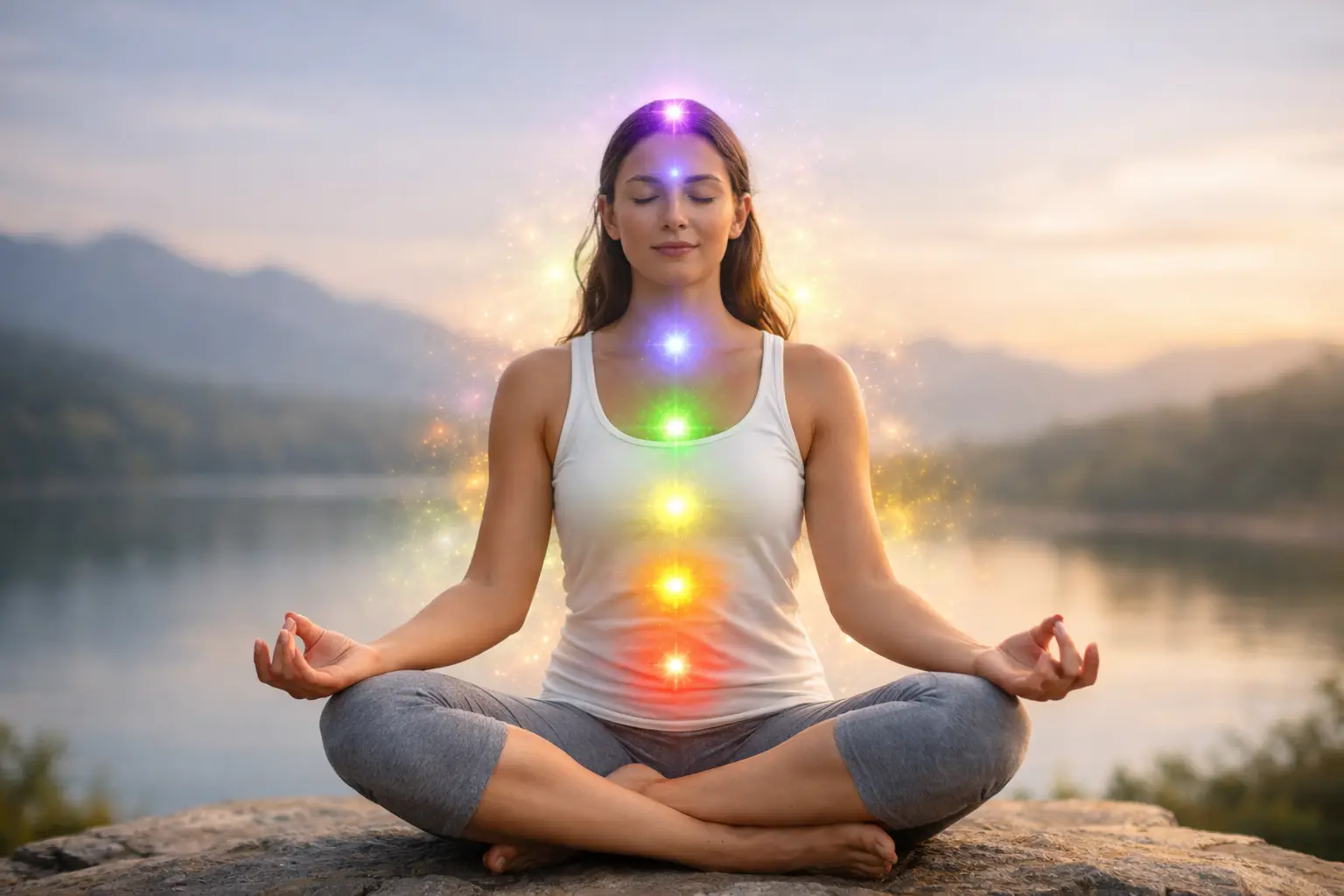
Some people expect fireworks after a chakra session. Others expect instant peace. What happens after chakra healing is often much more subtle and personal than either of those extremes.
You may feel lighter, calmer or more centred after a session. You may also feel tired, emotional, unusually reflective or notice very little at all. None of these responses automatically proves that something has gone right or wrong. The important thing is to observe your experience without forcing an interpretation.
What happens after chakra healing in the first 24 hours
During the first period after chakra healing, some people notice that they feel quieter or more aware of their body. They may experience warmth, heaviness, relaxation, changes in breathing or a greater desire to rest. Others simply continue with their day and notice no obvious difference.
Tiredness can also occur, but it should not automatically be interpreted as a sign that the healing is “working”. The body may be tired for many reasons, especially if someone has already been under considerable stress or sleeping poorly. If rest feels appropriate, allow yourself to rest without turning the experience into a spiritual test.
Emotions may also become more noticeable. A person may suddenly feel tender, reflective or aware of something that had previously been pushed aside. Greater quietness can sometimes make feelings easier to recognise, but it is better to observe them honestly than to assume that every emotion is being spiritually released.
The most common shifts people notice
Chakra healing does not affect everyone in the same way because every person arrives with a different physical condition, emotional history, level of stress, sensitivity and spiritual experience. Some people notice clear changes, while others experience the work much more quietly.
Emotional release
People sometimes become more conscious of sadness, frustration, grief, anger or relief after energetic work. Within chakra traditions, these experiences may be understood as part of becoming more aware of areas in which energy and emotion have been held.
The important point is not to panic when emotion becomes visible, but neither should every feeling automatically be labelled as a healing release. Sometimes meditation or energetic work simply creates enough inner space for something already present to be noticed more clearly.
More grounded energy
After grounding or lower-chakra work, some people report feeling less scattered and more physically present. They may find it easier to slow down, concentrate on one thing at a time or recognise when they have become mentally overstimulated.
This does not mean that fear or confusion suddenly disappears. A more realistic benefit is the gradual development of greater awareness of when balance is being lost and what helps restore it.
Better sleep and deeper rest
Some people sleep more deeply after chakra healing, while others notice no change or even experience a restless night. Sleep is influenced by many physical, psychological and lifestyle factors, so it should not be used as a simple measurement of whether a session has been successful.
If you feel temporarily tired, allow yourself appropriate rest and observe what happens without assuming a particular cause. Persistent sleep problems or significant exhaustion deserve proper assessment rather than being explained only through energetic healing.
Heightened awareness
A healing session may sometimes make you more aware of environments, conversations, habits or relationships that affect your inner state. This increased sensitivity can be useful when it leads to clearer observation and better choices.
The purpose is not to become afraid of other people’s energy or to withdraw from ordinary life. Greater awareness should gradually help you understand your own reactions and boundaries more clearly.
Mental clarity
Some people describe greater clarity after energetic work. Within chakra teachings, the solar plexus, throat and third eye are associated with personal direction, expression and inner seeing, so practices involving these centres are often connected with clarity and discernment.
That does not mean chakra healing gives automatic answers or guarantees better decisions. Its value may lie in creating enough inner quietness for a person to recognise more clearly what has already been present.
Why you might feel worse before you feel better
This is one of the areas where energetic healing is often misunderstood. Feeling tired, emotional or unsettled after chakra work should not automatically be described as a necessary healing crisis or evidence that blocked energy is being released.
A person may become more aware of emotions or physical tiredness after becoming quiet, and some temporary changes may occur. But there are many possible explanations for discomfort, and spiritual language should not be used to dismiss genuine physical or psychological symptoms.
This is where discernment matters. Chakra healing is not a substitute for medical or psychological care, and strong, persistent or concerning symptoms should be assessed appropriately. Grounded spiritual work respects the body and emotional reality rather than romanticising distress.
What happens after chakra healing over the next few days
For some people, the meaning of a session becomes clearer only afterwards. They may begin to recognise familiar reactions sooner, feel more conscious of certain relationships or notice that they want more quietness and less stimulation.
Other people experience no particular after-effect. Both responses are possible, and there is no universal timetable for how chakra healing should unfold.
You may also notice a greater desire for meditation, nature, nourishing food, rest or simple quietness. Rather than treating these impulses as proof of a special energetic process, you can simply notice whether they support greater balance in your life.
Sometimes the change is very ordinary. There may be a little less inner friction, greater patience in a difficult conversation or more awareness of where your energy and attention are continually being spent. These quiet changes can be more meaningful than dramatic sensations.
How to support the healing so it lasts
A chakra session can create an opportunity for greater awareness, but what you do in ordinary life remains important. If you immediately return to continual overstimulation, poor boundaries, irregular sleep and no space for reflection, it may be difficult to carry that awareness forward.
Drink water according to your normal needs, rest when necessary and eat in a way that supports your body. Give yourself some time away from continual digital input if that feels helpful. There is no need to follow an elaborate post-healing ritual.
Observation is often more valuable than control. Notice recurring thoughts, emotional reactions and situations in which you feel more open or more contracted. Awareness gives you information about how you are actually living.
Meditation can be especially valuable after chakra healing because it creates a quiet space in which these observations can continue. Conscious breathing, gentle movement, prayer, mantra and time in nature may also support a wider spiritual practice when they are appropriate for the individual.
Signs the chakra healing is integrating well
It is better not to judge chakra healing only by how peaceful you feel immediately afterwards. A more meaningful question is whether greater awareness begins to enter ordinary life.
You may notice an emotional reaction before acting upon it, recognise more clearly when a situation is draining you or become more conscious of patterns that were previously automatic. These are practical forms of awareness rather than proof of a particular energetic result.
Certain habits may also begin to feel less compatible with the way you want to live. Change does not always happen dramatically. Sometimes greater consciousness simply makes an old pattern more difficult to ignore.
In a deeper sense, chakra healing is not only about symptom relief. Within IAMGODIAM, it is part of learning to understand the energetic structure of the human being and to bring greater harmony between body, emotion, mind, energy and Consciousness.
When one session is not enough
It is unrealistic to expect one session to undo years of stress, grief, emotional conditioning or spiritual disconnection. A single experience may sometimes feel important, but deeper change usually requires time, conscious participation and continuity.
This does not mean that every person needs endless chakra sessions. The question is what the individual actually needs and whether further work remains useful.
For some people, one session may simply open awareness of an area that deserves more attention. For others, a structured period of energetic work may be more appropriate. The aim should never be to create dependency, but to help the person develop greater awareness and responsibility.
A mature healing path therefore considers the whole human being. Physical life, emotional patterns, energetic condition, mental habits and spiritual development are interconnected, and deeper work should respect that complexity.
What happens after chakra healing on the spiritual level
For some people, the most meaningful change is a renewed sense of inward connection. Meditation may feel more natural, prayer more sincere or the Heart more accessible. Others may simply experience a little more quietness and a stronger desire to live consciously.
Within the chakra framework, greater energetic balance can support the movement towards deeper awareness, but spiritual development should not be measured by sensations or unusual experiences. The more important question is whether you are becoming more grounded, truthful, compassionate and capable of carrying awareness into everyday life.
At IAMGODIAM, healing is approached with that wider purpose. The aim is not simply to feel better for a day, but to work with the whole human being and support a gradual movement towards greater balance, Consciousness and connection with the deeper Self.
If you are wondering whether your experience after chakra healing is normal, the most accurate answer is that there is no single response that everyone should have. Give the session space, observe yourself honestly and remain attentive to both your physical and emotional wellbeing.
Sometimes the most meaningful change is not dramatic at all. It may begin as a little more clarity, a little more stillness or a growing awareness of what genuinely brings you into balance.